

West Contra Costa Transportation Commission
Richmond Parkway Transit Plan — Appendix A: Engagement
Who was consulted, how, and what they said.
Appendix · Final · 2025 · 2 figures · about 31 min to read
Who was consulted, how, and what they said.
Current — In force. This is the version to rely on. The adopted final version.
Appendix A:
Community Engagement
Summary Notes
Appendix A: Community Engagement Summary Notes | 91
2201 Broadway | Suite 602 | Oakland, CA 94612 | (510) 834-3200 | Fax (510) 253-0059 www.fehrandpeers.com
Memorandum
Date: October 19, 2023 To: Leah Greenblat, WCCTAC From: Karina Schneider and Minnie Chen, Fehr & Peers Subject: RPTP Phase 1 Engagement Summary OK23-0506 Phase 1 of the Richmond Parkway Transportation Plan (RPTP) engagement focused on identifying and confirming needs. The goals of this phase were to:
Share information about the RPTP’s purpose, process, and desired outcomes
Connect with Equity Priority Community residents who live near or use Richmond Parkway
Confirm understanding of existing challenges and experiences using Richmond Parkway
Hear concerns and new ideas from members of the public This phase consisted of both in-person and digital strategies to reach a range of community members along the corridor between August and September 2023. This memorandum provides an overview of the Phase 1 engagement process and summarizes the feedback received.
Phase 1 Engagement Overview
Phase 1 Engagement consisted of the following strategies:
- Pop-Ups (3)
- Neighborhood Council Meetings (3)
- Online Webmap (1)
- Public Advisory Group (PAG) Meeting (2)
- WCCTAC Board Meeting (2)
The project team also considered hosting a bike ride along the Bay Trail to collect feedback, however, MTC and Rich City Rides led a total of three bike rides in this area on April 30th, May 28th, and August 17th, 2023. Given the number of rides already hosted in the area, the project
Original PDF, page 3
team elected to forgo the ride activity and requested that MTC and Rich City Rides share feedback received. To publicize the engagement opportunities #1-3 above, the project team developed social media ads through WCCTAC’s Facebook page in both English and Spanish, sent emails to the Technical Advisory Committee, PAG members, and neighborhood council contacts, and released a notice to the Executive Director Reports for the WCCTAC Board. The strategies and community members reached are described in further detail below.
Pop-Up Events
The RPTP project team coordinated and attended three pop-up events during this Phase. The following includes a description of each pop-up event:
North Richmond Flea Market (North Richmond) o Location:
716 W Gertrude Avenue o Date/Time
Sunday August 6, 2023, 10:30a-2:30p o Total Attendance: 38, 89% Spanish o Total Comments: 68
Thrive Thursdays (Coronado) o Location: Martin Luther King, Jr. Park at Harbour Way and Virginia Avenue o Date/Time: Thursday, August 10, 2023, 6:30PM – 8:00 PM o Total Attendance: 12, 25% Spanish o Total Comments: 41
Wal-Mart Pop-Up (Hilltop) o Location:
1400 Hilltop Mall Rd, Richmond, CA 94806 o Date/Time
Saturday August 19, 2023, 12p-4p (when foot traffic is highest) o Total Attendance: 34, 17.6% Spanish o Total Comments: 61 Three boards were utilized for pop-up engagement to visualize existing conditions findings and to collect feedback from community members. Overall, the project team connected with 84 people and collected 170 comments. At least one Spanish-speaking staff was present at each event and just over half (51%) of participants were Spanish speakers.
Responses Breakdown The RPTP team collected feedback during the pop-up events and found that most comments received were related to safety or driving/goods movement. One of the top sub-categories for driving/goods movement was congestion, whereas biking and walking comments primarily concerned wayfinding and signage. Of the “Other” category, the most common sub-category comments were related to cleanliness and landscaping along the Parkway. Regarding public health, air quality was the most common sub-category while speed management was the top Appendix A: Community Engagement Summary Notes | 93
Original PDF, page 4
sub-category for safety. Finally, transit related comments expressed a common desire for more transit service and connections. Figure 1 shows the overall distribution of the different categories of comments received at pop-ups.
Figure 1: Distribution of Pop-up Comments by Category
Source: Fehr & Peers, 2023.
Webmap
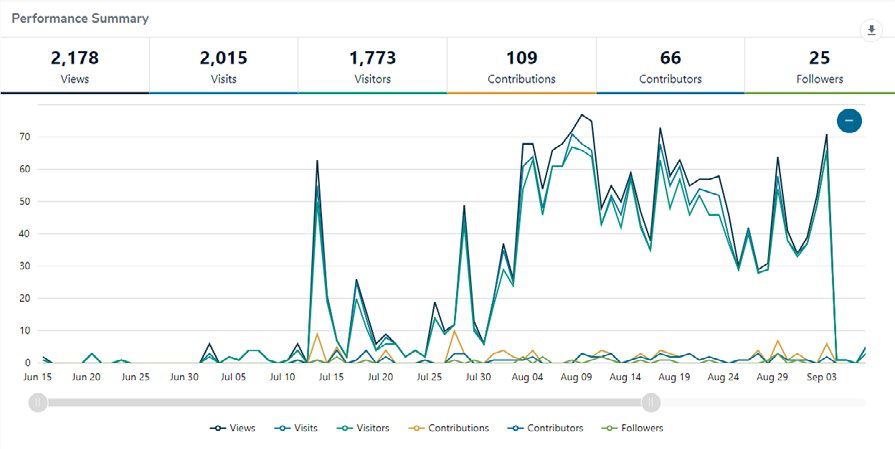
The webmap was hosted on Social Pinpoint between June 15th and September 4th, 2023. Users could drop pins in the webmap and leave a location-specific comment related to the following categories:
Biking
Walking
Driving
Transit
Other A total of 87 people provided 129 comments digitally. As seen in Figure 2, 109 comments were received on the webmap, while the remaining comments were collected from responses left on the Facebook ad post.
17% 25% 15% 4% 29% 10% Biking and Walking Driving and Goods Movement Other Public Health Safety Transit
Original PDF, page 5
Figure 2: Webmap Performance Summary
Responses Breakdown Nearly half of the comments were driving/truck related, of which approximately a third of the comments regarded general safety and speeding. More than a fourth of all comments relate to roadway conditions/comfort using the Parkway. Multiple landscaping comments mention trees blocking signals and creating hard braking incidents. Figure 3 shows the distribution of Webmap comments by category.
Figure 3: Distribution of Webmap Comments by Category
Source: Fehr & Peers, 2023. 48% 13% 17% 6% 16% Driving/Goods Comment Walking Comment Biking Comment Transit Comment Other Feedback Appendix A: Community Engagement Summary Notes | 95
Original PDF, page 6
Community Meeting Events
The RPTP project team presented at three community meetings in neighborhoods near/along Richmond Parkway. These include:
North Richmond Municipal Advisory Council (North Richmond) o Location: North Richmond Senior Center, 515 Silver Avenue, Richmond CA 94801 o Date/Time: Tuesday, September 5, 2023, 5:00p-7:00p
Parchester Village Neighborhood Council (Parchester Village) o Virtual over Zoom o Date/Time: Tuesday, September 12, 2023, 7:00p
Iron Triangle Neighborhood Council Meeting (Iron Triangle) o Location:
598 Nevin Avenue, Richmond, CA 94801 o Date/Time
Wednesday, September 20, 2023, 5:30p-7:30p There were comments regarding debris on sidewalks and roadways, as well as calls for infrastructure that improve biking and pedestrian connectivity, increased signage, and better signal coordination. Many comments expressed concern about speeding cars and unsafe driving behavior along the Parkway. Congestion was brought up as another issue along the Parkway, especially due to the large truck volumes. Aside from collision safety, public health impacts from toxic diesel were stated as equally problematic. In regard to project implementation, residents suggested hiring local residents.
Public Advisory Group
The Public Advisory Group (PAG) meeting for Phase 1 was held on September 21, 2023, though the group previously met once in Phase 0 in June 2023 to provide guidance on the draft Public Engagement Plan. While the Phase 1 meeting focused on existing conditions, feedback relevant to potential strategies was received in both meetings. In Phase 1, following a presentation on existing and future conditions findings, PAG members primarily discussed topics related to safety, maintenance, truck volumes, and community-serving solutions. Regarding trucking impacts, participants noted that a transition to electric fleets would require electrification infrastructure, such as charging stations, along the corridor. One member shared that despite a grant to invest in this, there is difficulty in acquiring the necessary equipment due to material shortages. Another member expressed the community’s concern of trucks cutting through the neighborhoods and briefly touched upon approved projects that involve truck electrification and truck-specific routes to encourage use of Parkway. The topic of electrification also brought about discussion of addressing pollution as a public health concern, to which green infrastructure and planting trees were suggested as mitigation strategies that could also contribute to beautification of the Parkway. Regarding safety, there were suggestions of adjusting signal cycle lengths to curb impatient driving behavior and discussion of methods of slow vehicle speeds. Light indications for crosswalks and blinking pavement lights were suggested for pedestrian safety. Safety and public health were identified as the highest priorities by several members, with maintenance and
Original PDF, page 7
beautification suggested as good strategies to consider in the process of addressing these priorities. Relevant feedback heard in Phase 0 included concerns about gaps in the pedestrian and bicycle networks due to a lack of facilities and outdated equipment. Regarding trucking, there were suggestions to request fair share contributions from distribution centers. Discussion of enforcing clean vehicle requirements also suggested a need for charging stations along the corridor to support truck electrification.
WCCTAC Board
The project team presented to the Board with updates on existing and future conditions findings during Phase 1 on September 29, 2023, though the group previously met once in Phase 0 in May 2023. While the Phase 1 meeting focused on existing conditions and potential strategies, feedback relevant to potential strategies was received in both meetings. Members of the board discussed trucking impacts, safety, and maintenance. Director Bana revealed plans to write to the legislature about banning newer, heavier trucks, while Director Tave suggested exploring time period limits for truck deliveries to reduce truck traffic during peak times. Director Bana added that although electrification could reduce future emissions, there should also be strategies to address existing contaminants from pollution. To address safety related to speed management, Chair Paul Fadelli (City of El Cerrito) suggested looking into lowering vehicle speeds through policies such as adjusting speed limits or designing to lower speeds. Director Cesar Zepeda (City of Richmond) emphasized the importance of bicycle safety as he shared that the Parkway experiences a high volume of fatal bicycle collisions, and that most of them are due to speeding vehicles. Director Bana also reminded the audience that beautification is a priority for Richmond.
There were suggestions to incorporate more trees in the design, which could contribute to both beautification and public health efforts. Relevant comments heard in Phase 0 included feedback from Director John Gioia (Contra Costa County) who shared that increased trucking is expected due to recent approval of new fulfillment centers. He added that recent studies reveal trucks leaving the congested Parkway to travel through local roads, so there are efforts to design new facilities that produce direct routes to the Parkway. Pavement damage was another trucking concern highlighted by Director Soheila Bana (City of Richmond) and Director Chris Kelley (City of Hercules). Director H.E. Christian Peeples (AC Transit) shared that special pavement for trucks and heavy vehicles can be used to address pavement damage. Director Eduardo Martinez (City of Richmond) additionally suggested passing an extra charge on distribution companies to help with the mitigation of truck impacts. On the topic of safety, Director Anthony Tave (City of Pinole) hoped to see efforts to address pedestrian safety through signage and crosswalk repair and Director Kelley hoped to see protected bikeways and consideration for electric bikes. Director Bana and Gioia also shared hopes of bringing the Parkway up to Caltrans standard so that the corridor could be adopted by Caltrans. Due to funding constraints, they would like to see costs incorporated in the evaluation of priorities in this project.
Appendix A: Community Engagement Summary Notes | 97
Original PDF, page 8
Phase 1 Feedback
Most comments received from the public referenced four topic areas:
- Safety
- 29% of pop-up comments
- 37% of online comments
- Biking & Walking
- 26% of pop-up comments
- 35% of online comments
- Congestion
- 13% of pop-up comments
- 16% of online comments
- Maintenance & Street Beautification
- 12% of pop-up comments
- 13% of online comments
A summary of feedback received on these topics is described below.
Safety
Safety was the top safety concern amongst pop-up and online engagement comments, and comments specifically related to speeding were common (15% of pop-up comments and 13% of online comments). PAG and Board members also expressed the desire to prioritize addressing preventable collisions.
Residents cited speeding through intersections and red lights as frequent occurrences. Some specifically pointed out that the stretch of Parkway opening from two lanes to four lanes near Giant Rd often sees speeding. Other speeding hotspots noted include the North Richmond area near Parr Blvd and by I-580 and I-80. Racing has also been reported to be an issue, especially at night, between Hilltop Dr and San Pablo Ave. Furthermore, there is a noticeable lack of police presence or cameras to discourage speeding. On the other hand, drivers remarked on unsafe driving conditions due to faded or nonexistent lane striping, which made lane demarcation barely visible, especially at night.
During peak period congestion, residents pointed out that drivers misuse turning lanes as a route to circumvent traffic. Some suggestions to address speed management include speed limit signs, speed bumps, and rectangular rapid flashing beacons (RRFBs). Chair Fadelli suggested adjusting the speed limit and providing better traffic enforcement. Other comments by pedestrians and bicyclists similarly were concerned about bad driving behavior and insufficient traffic enforcement. As a result, they felt that trails, bike lanes, and crosswalks were inadequate in addressing this.
Original PDF, page 9
Biking & Walking
The majority of comments related to biking and walking reflected a need for better comfort and safety while using the Parkway and the Bay Trail. Participants mentioned infrastructure issues such as missing sidewalks and curb ramps, poor accessibility to trails, and lack of signage. Director Zepeda’s comment on ADA improvements further underscores the lack of existing disability accommodations. The community found crossing the Parkway to be difficult and would like to see better crossing conditions, especially on Parr Blvd and Goodrick Ave.
Bicyclists also desire better bikeway connectivity to the Parkway and to connecting streets. There was strong interest in addressing unreliable access to the Wildcat Creek tunnel. Due to the tunnel’s tendency to flood, there were requests to investigate strategies that eliminate flooding, or building an overpass that would maintain the trail’s connection across the Parkway. Sidewalk and trail repair was also requested as potholes and railroads tracks on the Bay Trail near Hensley St make it hazardous to bike over. Bicyclists stated that adding more protected and separate lanes on the Parkway, Canal Blvd, and Castro St would make them feel much safer and comfortable.
Director Zepeda also emphasized the importance of addressing bicyclist safety as he called attention to the numerous crash memorials along the Parkway.
Lighting was also noted to be absent or unreliable and the community asked for signalized crossing to have longer crossing times. Several members of the public stated that homeless encampments block portions of the Bay Trail and sidewalk, making walking and biking difficult.
These concerns contributed to an overall sense of feeling unsafe while walking or biking along the Parkway.
Congestion
Congestion during peak periods was reported to be consistent on various intersections throughout the Parkway, including San Pablo Avenue, Giant Road, Canal Blvd, and 23rd Street.
Comments state that congestion is particularly bad during 4:00-7:00PM and identified the signals at the San Pablo Ave intersection to be problematic and a source of traffic back up. There were suggestions to improve and adjust signals for congestion, such as better detection, coordination, and shorter signal cycle lengths. As a result of congestion, residents stated they sometimes take local roads instead.
The community and WCCTAC board would also like to see truck traffic in the area addressed. Discouraging trucks from cutting through neighborhoods was desired, as well as reducing the public health impacts from trucks. The Board offered a variety of solutions, including truck- specific routes, hour restrictions for trucks, and passing extra charges on distribution companies.
Truck electrification was discussed extensively during the WCCTAC Board and PAG meetings as methods of emissions reductions in the future. A recurring suggestion throughout these meetings is incorporation of trees in design to mitigate air quality impacts to nearby residential areas from congestion.
Appendix A: Community Engagement Summary Notes | 99
Original PDF, page 10
Maintenance
There were strong desires to improve street maintenance as pedestrians, bicyclists, and drivers all experience hindrances that prevent comfortable navigation of the Parkway. Garbage and overgrown landscaping on the sidewalks and bike lanes pose safety hazards for people walking and biking. Additional trees and greening could also allow for better shade and contribute to overall beautification of the Parkway, which Director Bana and Zepeda confirmed was one of Richmond’s priorities. Director Bana added that this could be a good way to capture diesel pollutants. Drivers requested overgrown trees to be cut back as they block traffic signals and street lights or obstruct view of the intersection corners, contributing to hard braking incidents.
Faded and missing lane striping on the Parkway also make it difficult for drivers to stay in their lanes. Commenters further noted that trucks contribute significantly to poor pavement conditions and discussed the possibility of special pavement as a mitigation method.
Other
Transit was not one of the most common topics, but some commenters suggested providing better transit frequency and improving transit reliability on the Parkway. A few participants also noted the poor conditions of bus stops on and near the Parkway.
Members of the public have expressed frustration that despite multiple planning efforts, there is a lack of project implementation. Additionally, at the Iron Triangle Neighborhood Council meeting, several public speakers and council members expressed strong interest in requiring local hiring for any project implementation.
Original PDF, page 11
2201 Broadway | Suite 602 | Oakland, CA 94612 | (510) 834-3200 | Fax (510) 253-0059 www.fehrandpeers.com
Memorandum
Date: May 24, 2024 To: Leah Greenblat, WCCTAC From: Karina Schneider and Minnie Chen, Fehr & Peers Subject: RPTP Phase 2 Engagement Summary OK23-0506 Phase 2 of the Richmond Parkway Transportation Plan (RPTP) engagement focused on receiving feedback on the draft strategies, including which strategies to prioritize. The goals of this phase were to:
Share information about the RPTP’s purpose, process, and desired outcomes
Connect with Equity Priority Community residents who live near or use Richmond Parkway
Confirm draft strategies respond to existing challenges and experiences using Richmond Parkway
Hear preferences about which strategies to prioritize This phase consisted of both in-person and digital strategies to reach a range of community members along the corridor between March and April 2024. This memorandum provides an overview of the Phase 2 engagement process and summarizes the feedback received.
Phase 2 Engagement Overview
Phase 2 Engagement consisted of the following engagement methods:
- Public Advisory Group (PAG) Meeting (1)
- WCCTAC Board Meeting (1)
- Pop-Ups (2)
- Community Meetings (4)
- Online Survey (1)
Appendix A: Community Engagement Summary Notes | 101
Original PDF, page 12
To publicize the engagement opportunities #3-5 above, the project team developed social media ads through WCCTAC’s Facebook page in both English and Spanish and posted the details on the project webpage. For each engagement method the strategies were presented in the following categories:
- Driving and Goods Movement: Strategies that encourage carpooling, optimize signal timing, and improve wayfinding for drivers.
- Maintenance: Strategies that holistically address corridor and Bay Trail maintenance and reduce illegal dumping.
- Public Health: Strategies that reduce truck cut-through traffic and reduce or capture vehicle emissions.
- Safety: Strategies that reduce vehicle speeds, address intersection conflict points, and prioritize emergency vehicle access.
- Transit: Strategies that improve access and circulation at the Richmond Parkway Transit
Center and support and encourage transit ridership.
- Walking and Biking: Strategies that support comfortable walking and biking on the
Parkway and the Bay Trail. The strategies and community members reached are described in further detail below.
Public Advisory Group
The 3rd Public Advisory Group (PAG) meeting was held on February 22, 2024 as part of Phase 2 Engagement. Following a presentation on the draft strategies and Phase 2 Engagement Plan, the RPTP team requested feedback from participants. The PAG members primarily discussed strategies related to trucking and bicycling.
Although the PAG members generally expressed support for the draft strategies, members believed some trucking strategies would need to be implemented thoughtfully. One member shared that rerouting truck traffic is difficult and would need the City and County involvement to vet truck route updates. Another concern was the possibility of increased truck traffic when converting from diesel to electric trucks.
Some members expressed strong support for the walking and biking strategies as they currently found these modes to be uncomfortable on the Parkway. Another member hoped that proposed upgrades to on-street bikeways would go beyond striping and painting and incorporate physical buffers. The City of Richmond’s new e-bike bikeshare program was also suggested to be incorporated into the strategies. Members would also like to receive updates on available grants that the City and County could secure.
WCCTAC Board
The 3rd WCCTAC Board meeting presentation occurred on March 22, 2024 and focused on the draft strategies. Members of the board wanted to see strategies in the Safety, Driving and Goods
Original PDF, page 13
Movement, and Public Health categories prioritized and discussed the feasibility and funding of various strategies. Board members highlighted Safety as a very important category due to speeding on the Parkway and several WCCTAC Directors expressed strong interest in enforcement against speeding, especially speed cameras.
Driving and Goods Movement discussion centered around the enforcement of carpool lanes. A WCCTAC Director shared they may not be effective without proper enforcement and that in person enforcement can be dangerous on a road with such high speeds. There were also suggestions to add lighting to vehicle-oriented wayfinding signage due to low visibility at night.
Another WCCTAC Director supported the strategy to coordinate signals during the peak period and further suggested leaving the signals uncoordinated during off-peak periods due to high speeds during this time.
Comments related to Public Health primarily focused on trucking and incorporation of electric vehicle infrastructure. To help fund ongoing maintenance, a WCCTAC Director raised the possibility of enforcing a special tax on trucks based on their size or weight. There was also interest in new electric vehicle technology involving pad charging stations, which also received support from Director Peeples (AC Transit), as they are expecting to run battery electric buses in the future. Finally, for the topic of Transit strategies, a WCCTAC Director emphasized the importance of improving access to the Richmond Parkway Transit Center for pedestrians and bicyclists.
Some board members emphasized how the Wildcat Creek Trail overpass strategy (as opposed to the on-street crossing alternative) would be costly, although members of the public, including Urban Tilth and the North Richmond Shoreline Levy Project, indicated heavy interest in this strategy due to flooding in that area. For Walking and Biking, Director Peeples (AC Transit) also asked for consideration of paratransit access when proposing separated bikeways and suggested using AC Transit’s guidelines on multi-modal design as a reference.
The board members also shared feedback on how the strategies should be prioritized. A WCCTAC Director agreed with the goals alignment levels assigned to the strategies and suggested prioritization of strategies based on that assignment. Another WCCTAC Director noted that cost of projects should be considered as part of the prioritization process to favor strategies that can be implemented with fewer resources. There were further suggestions to prioritize strategies with the greatest effectiveness in the near-term and can be accomplished in the next five to ten years.
Another WCCTAC Director recommended investigating relevant ongoing projects that could incorporate some strategies, allowing these strategies to be immediately started and providing a funding source. An example provided was the incorporation of the urban greening strategy into an existing landscaping project led by a special assessment district for a section of the Richmond Parkway.
Appendix A: Community Engagement Summary Notes | 103
Original PDF, page 14
Pop-Up Events
The RPTP project team coordinated and attended two pop-up events during this Phase. The following includes a description of each pop-up event:
North Richmond Flea Market o Location:
716 W Gertrude Avenue o Date/Time
Sunday March 24, 2024, 10:30AM-2:30PM o Total Attendance: 23, 78% Spanish
North Richmond’s Earth Day Festival o Location: Shields-Reid Park, 1410 Kelsey Street o Date/Time: Saturday, April 20, 2024, 8:30AM – 12:30 PM o Total Attendance: 35, 29% Spanish Three boards were utilized for pop-up engagement to visualize draft strategies and collect votes for draft strategies that the participants would most like to see. Participants were asked to vote for their top five strategies and could vote for the same strategy more than once. They were also able leave comments about any strategies that they felt were missing. Overall, the project team connected with 58 people and received a total of 235 votes. At least one Spanish-speaking staff was present at each event and nearly half (48%) of participants were Spanish speakers.
Responses Breakdown Figure 1 shows the overall distribution of strategy votes by category. The top three strategy categories based on the votes received were Public Health, Maintenance, and Safety. Within the Public Health category, the most popular strategies included expanding urban greening and prohibiting truck parking and idling in neighborhoods. Maintenance strategies that were most popular pertained to illegal dumping, formalizing a cross-jurisdictional roadway maintenance program, and incorporating the latest signal technology. Under Safety, the voting results indicated a preference for reducing speeding and monitoring high-risk intersections for unsafe driving behavior. Top voted strategies in other categories included upgrading on-street facilities for walking and biking, improving biking and walking access to the Richmond Parkway Transit Center, and coordinating traffic signals.
Original PDF, page 15
Figure 1: Distribution of Pop-Up Votes by Category
Source: Fehr & Peers, 2024. In addition to strategy voting, participants were able to leave open comments. Most open comments suggested a strategy regarding improved lighting conditions, though lighting would be incorporated into existing strategies related to intersection- and segment-level design improvements. A few other comments expressed support for the draft strategies, particularly for speed reduction and maintenance as they either pointed out specific locations experiencing the problems that these strategies addressed or expressed desire for continued maintenance efforts.
A few comments also noted support for Transit strategies, particularly improved bus comfort and publicizing transit information.
Online Survey
The survey was hosted on Social Pinpoint between March 11th and April 29th, 2024. Users could select categories that they were most interested in and rank strategies in the selected categories.
The survey received a total of 124 responses. Responses Breakdown Participants were asked to select a minimum of two out of six strategy categories that they were most interested in. Based on the responses to this question, the top three categories selected were: Walking and Biking (27%), Safety (23%), and Maintenance (15%). Figure 3 shows this distribution of votes by category.
22% 19% 17% 16% 14% 12% Public Health Maintenance Safety Walking and Biking Transit Driving and Goods Movement Appendix A: Community Engagement Summary Notes | 105
Original PDF, page 16
Figure 3: Distribution of Survey Votes by Category Source: Fehr & Peers, 2024 Participants were also asked to rank strategies in the categories they selected. For Walking and Biking, the top strategies included upgrading on-street walking and bicycling facilities, spot improvements to the Bay Trail, and construction of a Wildcat Creek Trail overpass. The top Safety strategies were installation of intersection safety improvements and speed reduction measures.
Maintenance was selected by 15% of the responses, of which the top strategies included cross- jurisdictional management programs for roadway maintenance and the Bay Trail.
Although Transit, Public Health, and Driving and Goods Movement category were in the bottom three categories of interest, the top strategies in these categories included upgrading bus stop features for Transit, urban greening for Public Health, and coordinating signals for Driving and Goods Movement.
Survey Demographics Optional demographic questions were included at the end of the survey. Nearly 70% of survey respondents provided at least one response to these questions. Most respondents live in Richmond/North Richmond (60%) or San Pablo (11%). Over 65% of respondents have a household income of $100,000 or more. Additionally, nearly 70% of respondents identified as White and 16% identified as Hispanic or Latino. Given that 56% of the residents along the study corridor are Hispanic or Latino and 38% are low-income1, the survey results are not representative of residents living adjacent to the corridor. However, the Parkway is also a regional facility serving a broader community whose preferred solutions may look different from residents living along the corridor. Thus, it is important to supplement the results of this digital engagement strategy 1 Low income is defined as 200% of the federal poverty level or below 27% 23% 15% 13% 11% 11% Walking and Biking Safety Maintenance Transit Public Health Driving and Goods Movement
Original PDF, page 17
with in-person feedback from nearby residents to ensure balanced recommendations that accommodate all users of the Parkway while reducing harm to equity priority populations along the corridor.
Community Meetings
The RPTP project team presented at four community meetings in neighborhoods near/along Richmond Parkway. These include:
Parchester Village Neighborhood Council (Parchester Village) o Virtual over Zoom o Date/Time: Tuesday, March 12, 2024, 7:00PM
North Richmond Municipal Advisory Council (North Richmond) o Location: North Richmond Senior Center, 515 Silver Avenue, Richmond CA 94801 o Date/Time: Tuesday, April 2, 2024, 5:00PM-7:00PM
City of Richmond District 2 Meeting (Santa Fe) o Location: Bridge Art Space, 23 Maine Avenue, Richmond CA 94804 o Date/Time: Saturday, April 6, 2024, 10:00AM-12:00PM
Iron Triangle Neighborhood Council Meeting (Iron Triangle) o Location:
598 Nevin Avenue, Richmond, CA 94801 o Date/Time
Wednesday, April 17, 2024, 5:30PM-7:30PM Feedback received in the community meetings revealed the following categories to be highest priority: Safety, Maintenance, and Public Health. Community members were concerned about safety related to speeding and wanted traffic calming on the Parkway. Another Safety concern related to personal safety with requests for improved lighting and camera enforcement. For Maintenance, participants discussed the need for roadway repaving and sidewalk repair. For Public Health, truck impacts were a common topic, including negative impacts to roadway pavement, traffic, driving safety, and air quality. Community members in North Richmond asked to be continually included in the discussion of all truck-related strategies, such as location of truck routes and truck enforcement. Additionally, the Wildcat Creek Trail Overpass strategy was repeatedly emphasized as a heavily desired project in multiple meetings. Community members in Iron Triangle added concerns regarding personal safety when using the overpass. They suggested locking up entrances at night and/or adding an emergency button, but felt that this would be insufficient with slow response time.
Strategy voting was conducted at the District 2 meeting, which produced results suggesting Maintenance, Transit, and Driving and Goods Movement as top categories. Maintenance received one-fourth of the votes while the other two categories each received 17% of the votes. Within the Maintenance category, there were equal votes for upgrading signal technology, discouraging illegal dumping, and implementation of a roadway maintenance management program. The top Appendix A: Community Engagement Summary Notes | 107
Original PDF, page 18
Transit strategy was publicizing transit options and information while the top Driving and Goods Movement strategy was coordination of traffic signals.
Phase 2 Feedback
Based on a review of feedback received across all engagement opportunities, the top four draft strategy categories include Public Health, Safety, Maintenance, and Walking and Biking. The distribution of votes from the pop-ups and online survey were both considered, though greater weight was given to the pop-up votes given the feedback from equity priority populations living along the corridor. Due to the open-ended nature of the WCCTAC Board and Community Meetings, the results of these discussions were qualitatively measured in terms of level of support.2 The draft strategy categories, ranked in order of greatest preference to least based on all engagement activities, were:
- Public Health
- 22% of votes at pop-ups
- 11% of votes on online survey c.
Strong support from the WCCTAC Board
- Strong support at Community Meetings
- Safety
- 17% of votes at pop-ups
- 23% of votes on online survey c.
Strong support from the WCCTAC Board
- Strong support at Community Meetings
- Maintenance
- 19% of votes at pop-up
- 15% of votes on online survey c.
Moderate support from the WCCTAC Board
- Moderate support at Community Meetings
- Walking and Biking
- 16% of votes at pop-ups
- 27% of votes on online survey c.
Limited discussion from the WCCTAC Board
- Moderate support at Community Meetings
- Transit
- 14% of votes at pop-ups
- 13% of votes on online survey c.
Limited discussion from the WCCTAC Board
- Limited discussion at Community Meetings
2 Attendees at the City of Richmond District 2 meeting were able to vote on strategies via boards. These votes are taken into account when assessing the most popular strategy categories across Community
Original PDF, page 19
- Driving and Goods Movement
- 12% of votes at pop-ups
- 11% of votes on online survey c.
Strong support from WCCTAC Board
- Limited discussion at Community Meetings
A summary of feedback received on these categories is described below.
Public Health
Public Health was the top category at pop-ups and received 11% of the survey votes in online engagement. This category was also repeatedly discussed at community meetings, the PAG meeting, and the Board meeting. Conversations on Public Health typically focused on truck- related strategies. Participants at community meetings were interested in reducing truck traffic in neighborhoods and reducing emissions. PAG members were interested in these strategies but noted potential difficulties in implementing them. Board members were particularly interested in electric vehicle infrastructure and briefly discussed the issue of truck traffic as truck-generating uses continue to develop along the Parkway. Aside from trucking, urban greening was also a strategy that received support across most engagement events. It was the top Public Health strategy at pop-ups and was strongly supported by a member of the WCCTC Board.
Safety
Safety was the third most popular category in strategy voting at pop-ups and received support from 23% of the survey respondents in online engagement. The Board stated that Safety is a priority category, as they echoed the same concerns as the public regarding speeding and other dangerous driving behavior along Richmond Parkway. Two strategies that stood out in online engagement and pop-up events were speed reduction measures and monitoring of high-risk intersections. The Board discussed methods of enforcing these strategies, specifically installation of cameras and other automated methods. A WCCTAC Director also highlighted the importance of the Emergency Vehicle Preemption strategy. Members at the Iron Triangle community meeting shared concerns of personal safety due to criminal activity and requested improved lighting, which was also a popular comment at the community meeting in Parchester Village and pop-ups.
Maintenance
Maintenance was the second most popular category at pop-up events and received 15% of the votes in the online survey. Recurring strategies that received the most support was implementation of cross-jurisdictional management programs for roadway maintenance and the Bay Trail. Discouraging illegal dumping received a substantial amount of support at pop-ups and there were multiple open comments from the participants asking for continued maintenance of the roadway and abandoned buildings on and near the Parkway. Maintenance, particularly roadway maintenance, received significant support at community meetings. A WCCTAC Director Appendix A: Community Engagement Summary Notes | 109
Original PDF, page 20
also shared that the illegal dumping was a strong concern due to how costly it is and would like stronger enforcement to discourage this.
Walking and Biking
Walking and Biking was the fourth most popular category at pop-up events and received votes from 27% of the online survey respondents. PAG members strongly supported this category as they expressed how uncomfortable it is for pedestrians and bicyclists on Richmond Parkway and the Bay Trail. They asked for improved walking and biking infrastructure and suggested that City of Richmond’s newly launched e-bike bikeshare program could be incorporated. The strategies that received the most votes across all engagement events included upgrades to on-street facilities and the Bay Trail as well as the Wildcat Creek Trail overpass. While the Wildcat Creek Trail overpass received a lot of support from the public, the Board expressed concerns over its cost and thus preferred the signalized crossing improvements strategy instead.
Transit
The Transit category did not appear to be a priority category based on limited input and discussion via online engagement, pop-ups, and community meetings. However, the transit strategy to improve bicycling and walking access to the Richmond Parkway Transit Center received support from pop-up engagements and a member of the WCCTAC Board. The strategy to improve bus stop comfort was another transit strategy that received support from pop-up and online engagement.
Driving and Goods Movement
While engagement participants did discuss the impacts of trucks at pop-ups and Community Meetings (e.g. neighborhood emissions, pavement quality, etc.), strategies that support the movement of trucks and vehicles under the Driving and Goods Movement category received limited input from most engagement events. However, the Board discussed this topic at length.
Coordinating traffic signals was a strategy that received consistent support across all engagement events and the WCCTAC Board provided some feedback how to implement this strategy.
Redesigning the merge at the intersection of Richmond Parkway with Castro Street received some support in pop-ups and online engagement. The strategy to add carpool lanes in areas of high congestion was also supported by a WCCTAC Director, but the Board discussed the difficulties of enforcing these lanes.
Original PDF, page 21
2201 Broadway | Suite 602 | Oakland, CA 94612 | (510) 834-3200 | Fax (510) 253-0059 www.fehrandpeers.com
Memorandum
Date: December 23, 2024 To: Leah Greenblat, WCCTC From: Karina Schneider, Fehr & Peers Subject: RPTP Phase 3 Engagement Summary OK23-0506 Phase 3 of the Richmond Parkway Transportation Plan (RPTP) engagement focused on receiving feedback on the priority strategies and the Draft Plan. The goals of this phase were to:
Confirm priority strategies respond to key challenges using Richmond Parkway
Understand concerns and preferences related to funding and implementation This phase consisted of both in-person and digital strategies to reach community members and policy makers between October and December 2024. This memorandum provides an overview of the Phase 3 engagement process and summarizes the feedback received.
Phase 3 Engagement Overview
Phase 3 Engagement consisted of the following engagement meetings and methods:
- Public Advisory Group Meeting: October 9, 2024
- WCCTC Board Meeting: October 25, 2024
- Richmond City Council Meeting: November 19, 2024
- Contra Costa County Board of Supervisors Transportation, Water, and Infrastructure
Committee Meeting: December 9, 2024
- Online Survey: November 4, 2024 through November 29, 2024
Presentations given to groups listed under #1 through #4 above focused on the priority strategies in the Draft Plan, suggested next steps for implementation, and an overview of different potential funding sources.
Appendix A: Community Engagement Summary Notes | 111
Original PDF, page 22
Phase 3 Engagement Feedback
Feedback received during this phase generally supported the Draft Plan priority strategies with suggestions on how to implement and fund them. A summary of feedback provided by community members and policy makers is described below.
Public Advisory Group
The 4th Public Advisory Group (PAG) meeting was held on October 9, 2024. Following a presentation, the project team requested feedback from participants on the priority projects and implementation strategies. The PAG members primarily discussed strategies related to trucking and active transportation.
PAG members were appreciative to see strategies addressing truck-related impacts included in the priority strategy list as truck impacts continue to be a consistent topic raised in community discussions. Members noted that North Richmond community leaders would like to be involved during the implementation phase of the truck-related strategies.
Some members expressed strong support for the walking and biking strategies, specifically the strategy to realign the Bay Trail between Hensley Street and Gertrude Avenue. One member noted that they supported the signalized Wildcat Creek Trail crossing strategy as an alternative to a grade separated bicycle and pedestrian crossing recommended in previous planning efforts, which would be more expensive and difficult to implement. They noted the importance of going after grant funding to advance these types of strategies.
WCCTC Board
The 4th WCCTAC Board meeting presentation occurred on October 25, 2024. Some members of the board supported the near-term implementation of less expensive strategies, such as the truck route update strategy and signal coordination, and strategies that could be implemented through ongoing efforts like tree planting to be able to communicate early wins with the public. Other members noted the importance of strategies that aim to protect vulnerable roadway users, like safety improvements at intersections, but recognize the relatively high cost and longer implementation horizon for these infrastructure strategies. They expressed the desire to identify opportunities to implement these types of strategies in batches and in conjunction with other strategies where feasible.
Specific funding and implementation feedback recommended tapping into Regional Measure 3 funding with approximately $10M dedicated to Richmond Parkway projects. A Board member also recommended looking into Measure X to support implementation of public health strategies.
One public comment was received from Bike East Bay representative Robert Prinz. Prinz recommended focusing roadway safety improvements on high demand or high collision areas
Original PDF, page 23
and incorporating safety improvements into repaving projects. He also noted a potential need for more commuter bus service to support congestion relief in the area.
Richmond City Council Meeting
The project team presented to the Richmond City Council on November 19, 2024. While Councilmembers generally supported the strategies in the Draft Plan, some noted concerns with putting too much implementation responsibility on the City of Richmond given the regional- serving nature of the corridor and existing staff capacity constraints. Councilmembers discussed the desire for County and WCCTC staff to support the City in identifying, pursuing, and managing funding sources for strategy implementation. No public comment was received.
Contra Costa County Board of Supervisors Transportation, Water, and
Infrastructure Committee Meeting
The project team presented to the Contra Costa County Board of Supervisors Transportation, Water, and Infrastructure Committee (TWIC) Meeting on December 9, 2024. The TWIC members consist of Supervisor Diane Burgis of District III and Supervisor Candace Andersen of District II.
The Supervisors supported the strategies recommended in the Plan, but did not provide specific recommendations or changes to the strategies given that the study area falls outside of their districts in District I. They discussed that an important next step would be for WCCTC, City of Richmond, and County staff to identify which strategies to fund and implement first. No public comments was received.
Online Survey
The survey was hosted on SurveyMonkey between November 4th and November 29th, 2024. Users responded to the following four questions:
- What’s your zip code?
- The Draft Plan’s strategies respond to your needs and challenges on the corridor. (Multiple choice)
- Strongly Agree
- Agree
- Somewhat Agree
- Disagree
- Strongly Disagree
- Which of the priority strategies do you want to see advanced first? (Choose up to 3)
- Public Health: Incorporate trees and greening into all infrastructure projects on the corridor
- Public Health: Update designated truck routes in North Richmond to avoid residential areas to the extent feasible
Appendix A: Community Engagement Summary Notes | 113
Original PDF, page 24
- Public Health: Implement no truck idling or parking zones near sensitive land uses
- Safety: Install safety treatments at intersections along the corridor
- Safety: Implement measures to reduce speeding and conduct a study to lower the speed limit
- Walking and Biking: Upgrade bikeways and the Bay Trail and connect sidewalk gaps
- Walking and Biking: Install on-street signalized Wildcat Creek Trail crossing
- Maintenance: Implement a cross-jurisdictional Roadway Pavement and
Maintenance Management Program i. Driving and Goods Movement: Upgrade and coordinate traffic signals along the Parkway j. Transit: Improve biking and walking access to the Richmond Parkway Transit Center
- Is there any other feedback you would like to share about the Draft Plan? (Open ended—optional)
The survey received a total of 24 responses. Over half (63%) of survey responders live in zip codes that overlap the study area. Responses Breakdown Participants were asked to provide feedback on the responsiveness of all the strategies to participant needs and which priority strategies they wanted to see advanced first. Based on the responses to Question #2, over 70% of respondents agreed or strongly agreed that the Draft Plan strategies respond to their needs and challenges on the corridor, as seen in Figure 1.
Based on the responses to Question #3, the top five priority strategies selected were:
- WB-1: Upgrade bikeways and connect sidewalk gaps (n=18)
- S-1: Safety improvements at intersections (n=11)
- PH-2: Trees and green infrastructure (n=8)
- S-2: Reduce speeding (n=7)
- M-1: Implement cross-jurisdictional maintenance program (n=7)
Figure 2 show the distribution of results for Questions #3.
Original PDF, page 25
Figure 1: Survey Response to Q2 The Draft Plan’s strategies respond to your needs and challenges on the corridor. Source: Fehr & Peers, 2024 Figure 2: Top 5 Survey Responses to Q3 Which of the priority strategies do you want to see advanced first?
Source: Fehr & Peers, 2024 Most open response comments reiterated the need for the strategies recommended in the Plan with major themes related to improving maintenance of the Parkway, supporting bicyclist protection along the corridor, and retiming signals.
29% 42% 21% 4% 4% Strongly Agree Agree Somewhat Agree Disagree Strongly Disagree WB-1: Upgrade bikeways and conecct sidewalk gaps S-1: Safety improvements at intersections PH-2: Trees and green infrastructure S-2: Reduce speeding M-1: Implement cross-jurisdictional maintenance program Appendix A: Community Engagement Summary Notes | 115
Original PDF, page 26
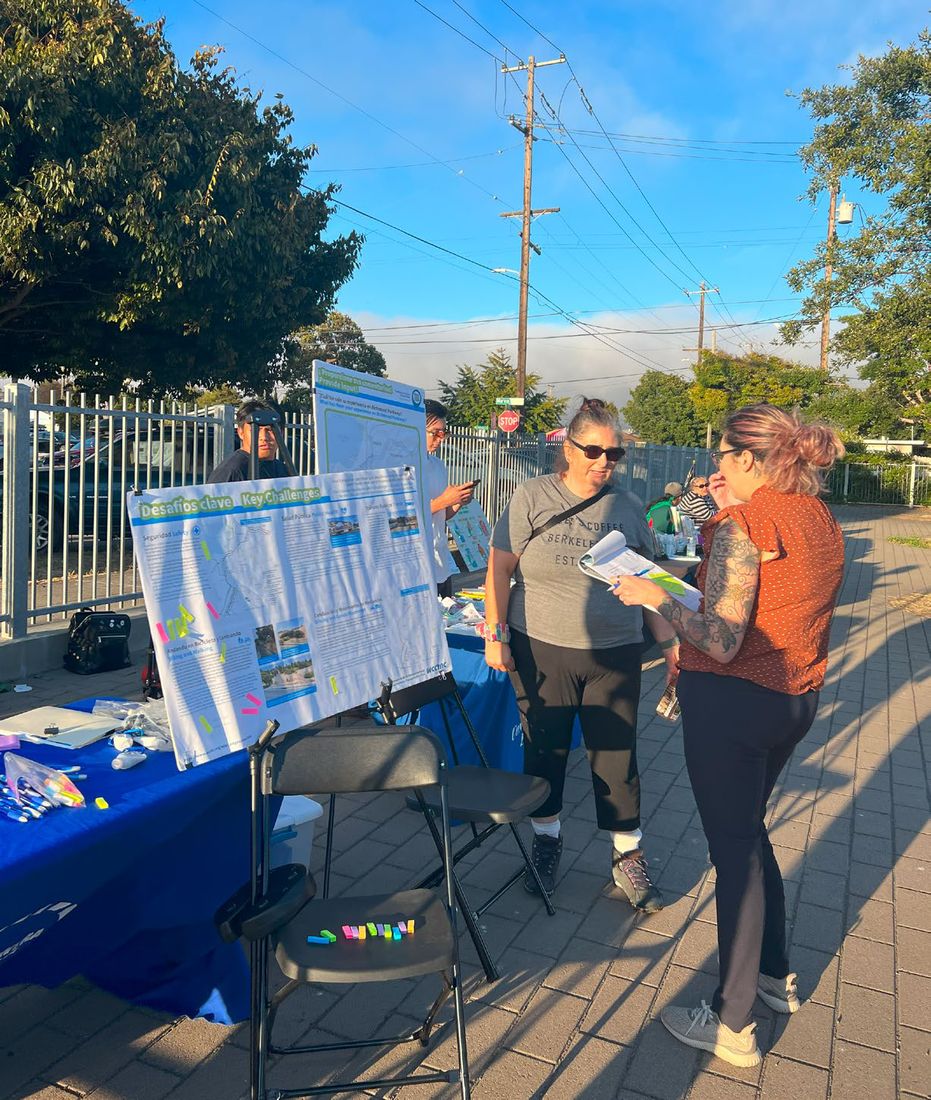
Photo of pop-up event during Phase 1 of engagement in the Coronado neighborhood.
In the same set
The original file
Everything above is the content of the original document, published here as a web page so it can be read, searched, translated and used with a screen reader. The original PDF is kept as the authoritative record.